Skip to content

Hospitality & Tourism

1969 D’Kelly Hotel Smart Heritage Boutique Hotel

A 1960s-styled boutique hotel in Ipoh, given a website that sells the nostalgia — and a guest experience behind it that runs on smart-room controls, facial-recognition entry and a digital e-Butler.

  • IoTVoice and touch room controls
  • Face IDKeyless guest entry
  • 3Room types, booked direct
Platform
WordPress + Elementor
Project type
Hotel website + smart-room integration
Category
Hospitality & Tourism
Visit the live site (opens in a new tab)
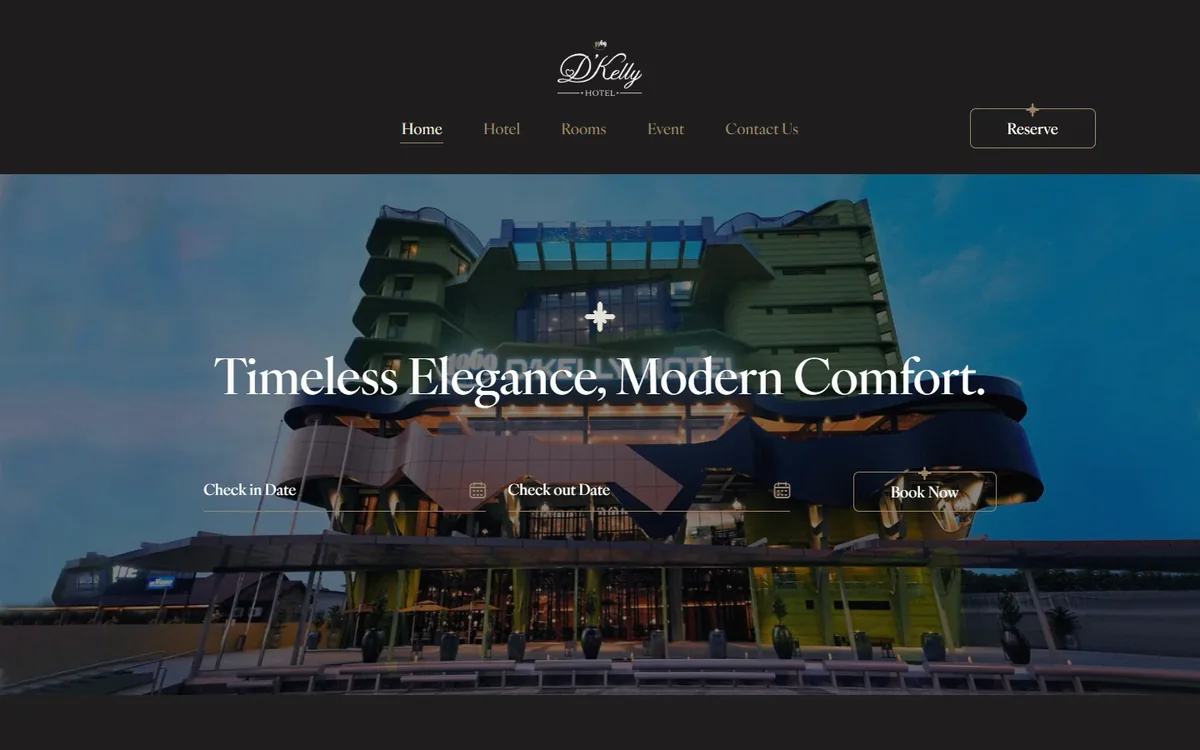
1969 D’Kelly Hotel — homepage on desktop

The Project

What we built, and why.

1969 D’Kelly Hotel sits in Ipoh and trades on a specific promise: the look and feel of the 1960s, with none of the inconvenience. The website had to carry that promise before a guest ever arrived — warm, period-true visuals, room by room, with the booking a tap away.

Behind the site sits the part guests never experience as technology: rooms that respond to voice and touch, an entrance that recognises a returning face, and an e-Butler that takes requests digitally. The brief was to make all of it feel like hospitality, not hardware.

Technologies used

  • WordPress CMS
  • Elementor
  • Custom reservation engine
  • IoT room-control integration
  • Facial-recognition access
  • Vimeo video
  • Google Tag Manager
  • Yoast SEO

Visual Work

The design, on every screen.

Desktop — 1440px
1969 D’Kelly Hotel on a phone
Mobile — 390px

Design Process

How we approached it.

We designed from the hotel outward. The building’s 1960s styling set the palette, the type and the photography direction; the site’s job is to feel like walking into the lobby, then get out of the way when someone is ready to book.

The rooms are the product, so each one leads with the facts a guest compares — size, bed, occupancy — before the story. Reserve and Book Now stay within reach on every screen, and F&B and event enquiries have their own routes, so they never compete with a room booking.

Development

Build highlights.

  1. Smart Room Integration

    Voice-activated controls, touch screens and magic mirrors inside guest rooms.

  2. Biometric Security

    Facial recognition and keyless entry for enhanced security and seamless access.

  3. e-Butler System

    A personalised digital concierge that lets guests request services digitally.

  4. Booking Engine

    A custom reservation system with Reserve and Book Now flows tailored to Premium, Superior and Deluxe room types.

Problem Solving

Challenges and solutions.

01 Challenge

Making smart-room technology feel like hospitality, not hardware.

Voice controls, touch panels and keyless entry can easily read as gadgets — and a heritage hotel cannot afford to feel like a showroom.

01 Solution

Present every feature as a service.

Each smart feature is described by what it does for the guest — light, comfort, entry, requests — inside the same warm 1960s visual language as the rooms.

02 Challenge

Selling three similar room types without a spec-sheet comparison.

Premium, Superior and Deluxe King differ in size and feel more than in features, and a cluttered comparison loses bookings.

02 Solution

Lead with the three numbers that decide a stay.

Every room shows size, bed and occupancy up front, with Reserve and Book Now beside it, so the choice takes seconds.

Outcome

Results and impact.

The hotel sells its rooms directly from its own site, with the 1960s story and the booking in the same place. Guests arrive already knowing how their room works: the smart controls, keyless entry and e-Butler are part of the promise, not a surprise at check-in.

Rooms, galleries and events are managed by the hotel team in the CMS, without a developer.

1969dkellyhotel.com

Takeaway

Final thoughts.

“A heritage hotel can run on smart infrastructure — as long as the guest only ever feels the heritage.”

The best hotel technology disappears into the stay. We built the platform so the rooms do more, and the website talks less about the machinery and more about the experience.

Your platform could be the next one we write up.

Tell us what you’re trying to launch. We’ll map the architecture, the integrations and the build sequence before you commit to anything.